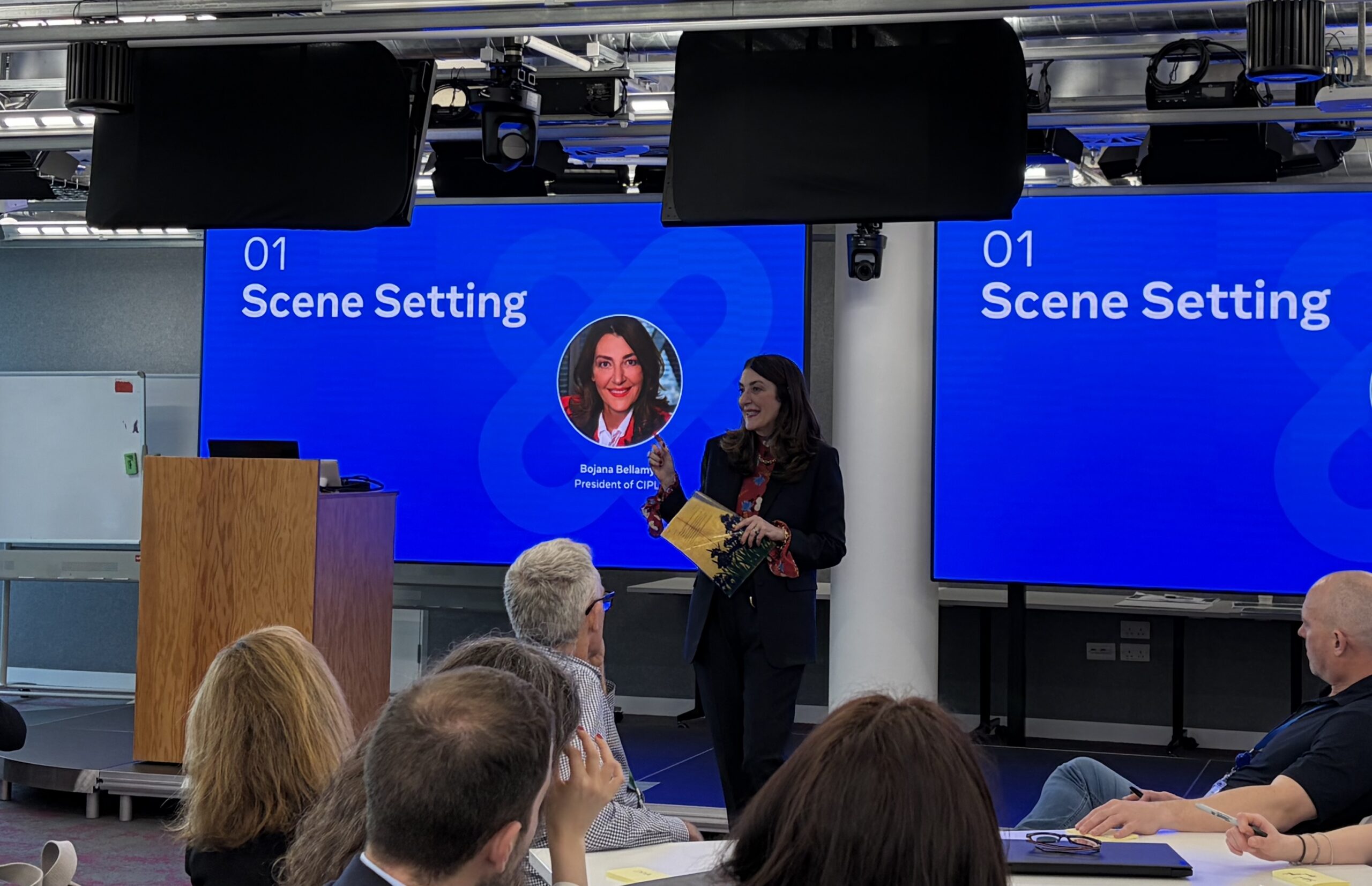
On Wednesday 15th May, CIPL, in partnership with Meta’s Trust, Transparency & Control Labs (TTC Labs), convened a Design Jam focused on the evolving role of artificial intelligence in compliance and data protection in Dublin. Bringing together privacy professionals from legal, policy, and technical backgrounds, the session offered a dynamic, hands-on exploration of how AI is reshaping compliance frameworks.
The Design Jam format fostered open dialogue and collaboration across sectors and disciplines. Attendees engaged in hands-on exercises, shared real-world experiences, and explored ideas for responsible automation at varying levels of organizational maturity.
Insights from the session will contribute to an upcoming industry report, providing a broader synthesis of key findings and recommendations. CIPL and TTC Labs will be taking this event to San Francisco at the end of the month, and CIPL members will have the opportunity to continue the conversation through upcoming follow-up sessions and future thought leadership initiatives.
Horizon Scanning: Compliance 2.0
A central theme throughout the workshop was the opportunity that automation provides to compliance teams who are facing increasingly complex regulatory regimes. Manual compliance processes are insufficient to meet the demands presented by complex regulatory regimes and data-driven business functions. Participants reflected on how automation can free up compliance expertise to focus on high-value, strategic thinking and build proactive, scalable, and adaptive compliance models.
Discussions emphasized that AI has moved beyond being a tool for efficiency – it is a catalyst for rethinking the compliance lifecycle. From enhanced risk detection to real-time monitoring and iterative improvement, AI solutions have the potential to unlock new opportunities to strengthen accountability and governance.
Designing AI with Accountability in Mind
Through interactive exercises, multidisciplinary teams examined the role of humans in shaping and managing AI systems for compliance. A key takeaway was the importance of positioning humans as “architects” of AI —responsible for setting objectives, defining guardrails, and ensuring that automated processes align with legal and ethical standards.
Participants explored how organizations can embed accountability into AI systems from the outset, rather than retrofitting controls after deployment. This includes designing for accuracy, transparency, auditability and explainability, as well as ensuring meaningful human oversight.
Earlier Risk Identification, Better Outcomes
Another focus area was the potential for AI to improve risk management by aligning various risk vectors and identifying issues earlier in the compliance lifecycle. Workshop groups analyzed practical scenarios where AI could surface emerging risks, prioritize responses and support more informed decision-making in a timely manner.
The consensus was that earlier detection leads to more effective mitigation strategies and ultimately better outcomes for both organizations and the individuals whose data is being processed. AI-driven insights can help shift compliance from a reactive function to a strategic advantage.

Looking Ahead
The Design Jam underscored that the future of compliance lies at the intersection of technology, governance and human judgment. Traditional approaches to compliance will be inadequate as complex data-driven models take on more significance in modern business. Organizations that invest in thoughtful and accountable automated compliance solutions will be better positioned to navigate complexity, manage risk and build trust.