CIPL’s response draws on our extensive work on accountability, age assurance, and responsible data use, and makes several key points, including:
- The need for a holistic, multistakeholder approach to children’s online safety — one in which industry provides safe and well-designed services, regulators set outcome-driven standards, parents and caregivers are equipped with the tools and literacy to guide their children’s digital lives, educators deliver digital literacy as a core competency, and children themselves are empowered and resilient online.
- Recognition that children’s digital participation brings genuine benefits — for learning, development, accessibility, and social connection — and that effective regulation should protect children without foreclosing access to age-appropriate content and services.
- A strong preference for risk-based and proportionate approaches over categorical bans, supported by context-specific risk taxonomies tailored to individual business models and operational realities.
- The need for proportionate, privacy-preserving age-assurance measures that balance child protection with established privacy rights, minimise data collection, mitigate exclusion risks, and safeguard personal data.
- The view that the age of consent should only be changed where clear evidence demonstrates a significant benefit to children’s well-being, given the compliance burdens and risks of fragmented protections.
CIPL is committed to supporting child safety and the ability of children to thrive online as mutually reinforcing goals.
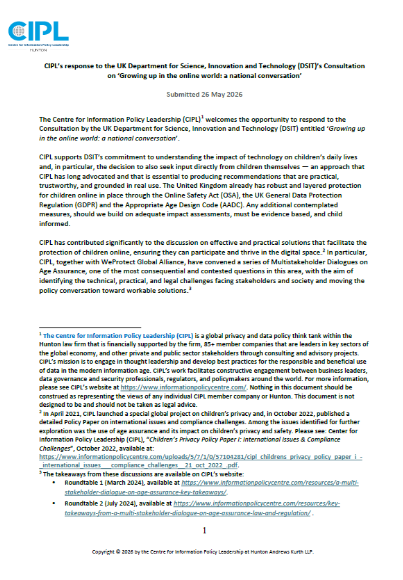
Download the Response
Download NowMore like this

September 2026
Establishing and Implementing Standards for Interoperable Age Assurance Solutions – Key Takeaways
Find out more
September 2026
CIPL Response to the UK Government’s Consultation: Data Regulation in the Age of AI and Other Data-Intensive Technologies
Find out more
September 2026
CIPL Response to the Department for Science, Innovation and Technology’s Call for Evidence: Data Flows You Can Trust
Find out more
July 2026
CIPL’s Response to the OPC Draft Guidance on “Assessing whether and how to use age assurance – Guidance for websites and online services
Find out more
July 2026
CIPL Response to the Colorado Department of Law Pre-Rulemaking Request for Comments under the Automated Decision-Making Technology Act
Find out more
July 2026
CIPL’s Response to ANPD Consultation on the Draft Guidelines on “Age Verification Mechanisms”
Find out more
June 2026